Luke Freeman
Mr. Ippolito
AP Biology - Review #2
9/13/18
Caron, Christina. “Giant Trap Is Deployed to Catch Plastic Littering the Pacific Ocean.” The
New York Times, The New York Times, 9 Sept. 2018,
Christina Caron’s article, published by the New York Times, serves as a great explanation of the methods being tested to solve the ocean debris issue. In it, she describes the primary method: a 2,000 foot trap. Yes, after reading this, one might think that this method would be too simple to be effective, but that is the best part. Twenty million dollars worth of funding for development and research have been sunk into this project from the “Ocean Cleanup”, a nonprofit organization dedicated to fixing this issue. The “Great Pacific Garbage Patch”, as Caron puts it, is, “a gyre of trash between California and Hawaii, comprises an estimated 1.8 trillion pieces of scattered detritus, including at least 87,000 tons of plastic”. If all goes according to plan, by mid-October, this long trap will have been towed 1,400 miles to the garbage patch. Testing has concluded that the current should pull this large trap in a “U” shape through the debris, and with a net hanging ten feet below the surface, it should collect nearly all of the trash. The reader is assured that marine life will not be harmed as they can simply swim underneath. However, Caron does specify that this has not yet been tested on the open ocean, so it is unclear if this will end up being an effective means to “clean half of the garbage patch in just five years”, which is the goal. That being said, many scientists and sponsors of this project are decidedly optimistic, and predict a successful trial run.
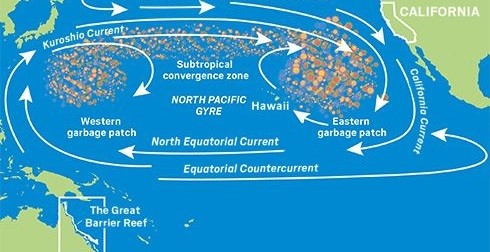
This issue of humans poluting the water has been one since the dawn of the modern era. Anything dumped into a waterway likely will end up in the ocean, which then gets picked up in the currents and accumulated, forming this massive garbage patch. For scale and an explanation of the currents effect on this plastic, I have linked a relevant picture computer generated image at the end of this article (see bottom). This island of floating plastic has serious environmental concerns, as marine life often gets ensnared in the plastic or swallows bits and pieces, which is hazardous to their health. A study published in “The Telegraph”, a British newspaper, found that, “more than a million seabirds and 100,000 marine mammals every year by ingestion and entanglement,” which is in part due to the inability of most plastics to biodegrade. Some small fragments of plastic can end up in our seafood. This in turn causes the digestion of unwanted chemicals. Overall, this is a worldwide problem which needs to be solved, and I think this trap method is our best bet.
While reading Caron’s article, I found myself very captivated. Not only does she do an excellent job of setting up the context, she also goes in depth into the techniques and proposed plan of action of the “Ocean Cleanup” project. Her small paragraphs also serve to keep the points of interest quick, and concise, while keeping the article itself moving. Yet, she does miss some key points which is a clear flaw in the article, that being Caron neglects to mention the significance and environmental impact the garbage patch actually has. After reading this article, I had to look up some of the statistics on marine life death, as well as what that means for humans. Other than that, Caron’s article does serve its purpose in explaining the trap technique, but more explanation of the garbage patch itself would have elevated it to the next level.
Garbage Patch Image: