This blog contains student opinions and postings about the concepts discussed during their study of biology in this college level course.
Monday, October 31, 2011
Gut Bacteria Linked to MS
Sunday, October 30, 2011
Considering When It Might Be Best Not to Know About Cancer
Kolata, Gina. "Considering When It Might Be Best Not to Know About Cancer." The New York Times 30 Oct. 2011, Health sec.: A21. The New York Times. 29 Oct. 2011. Web. 30 Oct. 2011.
Considering When It Might Be Best Not to Know About Cancer
After the same methods for decades of choosing to screen for cancer immediately if a person seemed to be at risk, doctors are beginning to think differently. In the article “Considering When It Might Be Best Not to Know About Cancer” by Gina Kolata, a bold new theory about cancer screenings have arisen. Experts say that screenings for cancer, especially breast, prostate, and cervical cancer, could actually harm the patient’s health instead of hurt them. This statement is completely earth shattering when it comes to our basic knowledge about cancer. It is almost an immediate thought when someone is diagnosed with cancer to go and get a screening. Clinical trial results are saying “screening often leads to what can be disabling treatments for men whose cancer otherwise would have never harmed them.” As the article goes on to say, screening for cancer is what everyone is familiar with, and to slowly move away from screening patients so often would possibly make them lack confidence in their doctors. Even doctors themselves say that this shocking new statistic may make things difficult between themselves and their patients: “General practitioners, who may agree with the new guidelines, worry about getting involved in long conversations with patients trying to explain why they might reconsider having a mammogram every year or a P.S.A. test at all.”
This theory of less screenings for cancer is definitely shocking to the medical world. The article even says since 1845 when Rudolf Virchow said that cancer is an uncontrolled growth that spreads and kills, and that there is now a new 21st century definition of cancer that needs to be held in account for new treatments. The idea that screenings are bad seems insane, but this article actually does make sense of it. It states that screenings could lead to dangerous medical procedures that were possibly unnecessary for the type of cancer that the patient had, because as doctors have discovered in recent decades, not all cancers are fatal. The article says, “Cancer experts say they cannot ignore a snowballing body of evidence over the past 10 years showing over and over that while early detection through widespread screening can help in some cases, those cases are small in number for most cancers. At the same time, the studies are more clearly defining screening’s harms.”
I believe this article was really well written and interesting. It made things clear to me about cancer screenings, both the pros and cons about them. I definitely am able to see both sides of how the screenings could help patients, but also hurt patients. With many different doctor’s comments on the matter and many different point of view presented, it made it easy for me to form my own opinion about it. The author did a great job of making things easy to understand, and I really enjoyed reading this article.
Taking Advantage of a Destructive Insect’s Weakness for Purple
Saturday, October 29, 2011
Monday, October 24, 2011
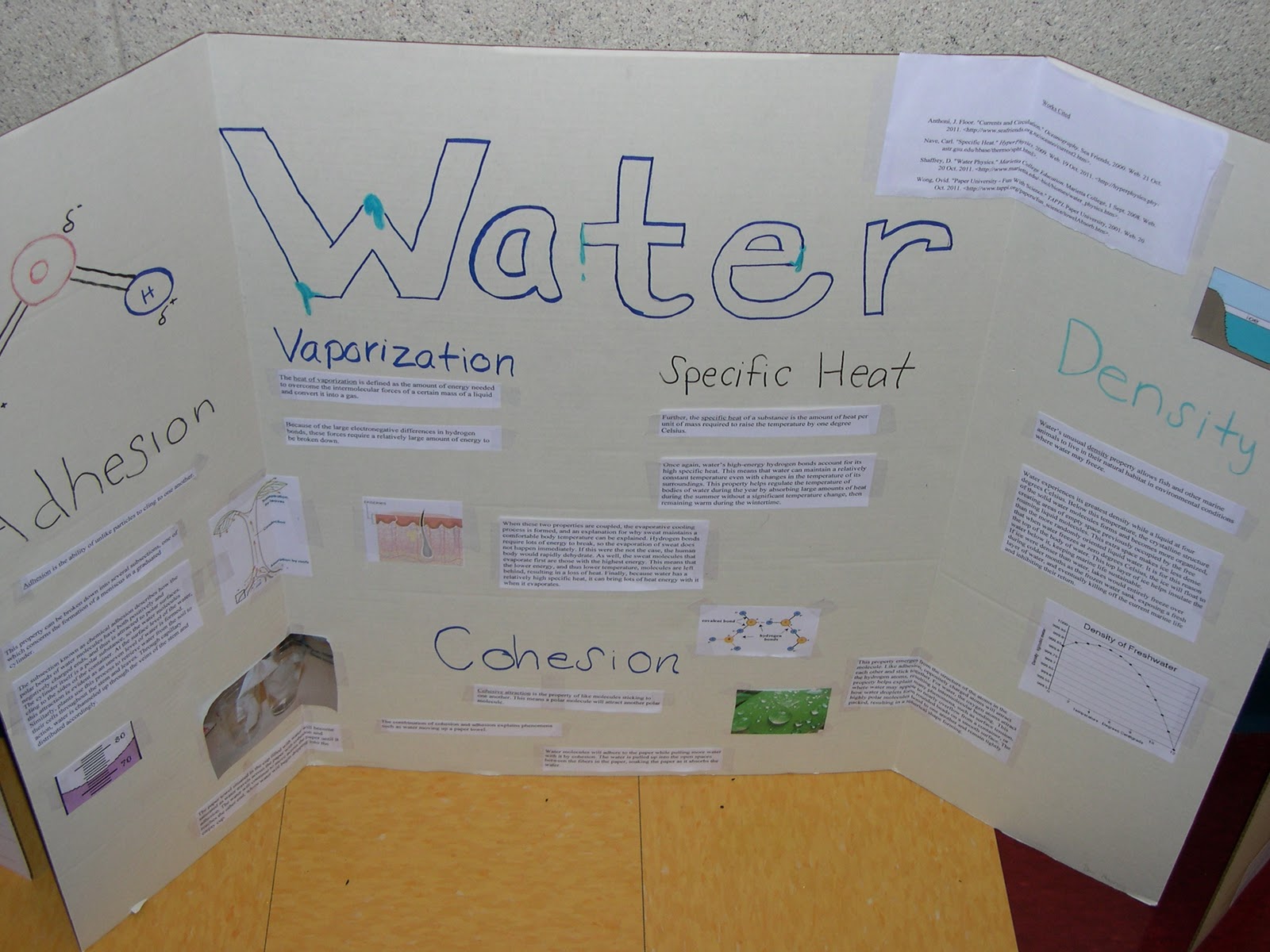
AP Biology Water Projects
A Austi the Properties of Water
C. Barth's Project
Barth Properties of Water
G. Connors' Project
Connors Water Properties Term Paper - AP Bio
W. Dougherty's Project
W Dougherty Water Project
M. Ebrahim's Project
Ebrahim Water Properties
T. Ennis's Project
Explore the Wonders of Water Blog/Web Site
J. Faselt's Project
J Faselt Water
T. Hudson's Project
Hudson Water
R. James' Project
James AP Bio Water Project PPT
J. Keating's Project
Keating Water Properties
A. Lemberger's Project
Lemberger Water Properties
G. Lilly's Project
Moran Water Phenomena
I. Palfrey's Project
Ian Palfrey Term Paper Water Properties
A. Pass' Project
A Pass Water
B. Walsh's Project
Walsh apbiowater
A.Weiden's Project
Weiden Water Phenomena
Posters
Wednesday, October 12, 2011
Scientists Solve Puzzle Of Black Death’s DNA
Vaccine Makes Headway Against Trachoma
This article told about a vaccine currently in development that would combat the blinding disease known as trachoma. The author explained what trachoma exactly is. Trachoma is a bacterial infection in the eye by a microbe known as C. trachomatis. Patients who suffer trachoma aren’t actually afflicted by the bacteria itself, but rather the immune response to the infection, which can lead to ocular scarring and blindness. The author then went on to talk about the vaccine, which would cause the bacteria in trachoma to trigger a less harmful immune reaction from the body. The article even stated that scientists are not quite sure how the vaccine works because the protein used in the vaccine is not completely known, “The plasmid encodes a protein whose function is unknown, so exactly how the vaccine works is unclear.” The author also spoke to the coauthor of the study, Harlan Caldwell, about this vaccine. The article further explained the basis behind the vaccine, “Caldwell suspects the plasmid “is driving a very strong innate immune response that, in a sense, becomes the pathology” for the infection. Removing the plasmid might allow a more specific immune reaction against the microbe with fewer harmful effects, he says.” Finally, the article talked about how the vaccine is being studied, with the experimentation on monkeys. In the study, six of twelve monkeys with a C. trachomatis infection were treated with the vaccine, and three of the six treated exhibited immunization to the infection. The other three only showed mild effects of the infection, while the six who were not treated showed moderate to severe eye disease.
This article and in particular this vaccine has a very widespread effect on humanity. If this vaccine is eventually perfected and tested to be safe for people with trachoma, then many people across the world would be able to have a chance at fighting this infection and possibly keep their eyesight. While it was explained in the article that any mass produced vaccine is in the distant future, after further experiments and reiteration, this vaccine could be patented and used to fight trachoma.
Overall, this article was well written, it summarized the current research into the vaccine for trachoma, and explained what scientists are doing to find the cure for this infection. The author did a good job of explaining, with the help of the coauthor of the study, how the vaccine would prevent eye disease, even though researchers don’t even know fully how this vaccine works. One thing that the author could have done better would be to explain who are the organizations currently taking part in this research and who else is looking to find this vaccine.